
Algorithmic Terraforming: Welcome to the Subscription Neighborhood
Week #10: We are living in the aftermath of a financial system that hunted down the "Particular" and replaced it with the "Format."

“We’re not adapting buildings to places anymore. We’re adapting places to algorithms.”
The Formula
I’ve laid out a dozen of these developments in my career. I know the formula by heart.
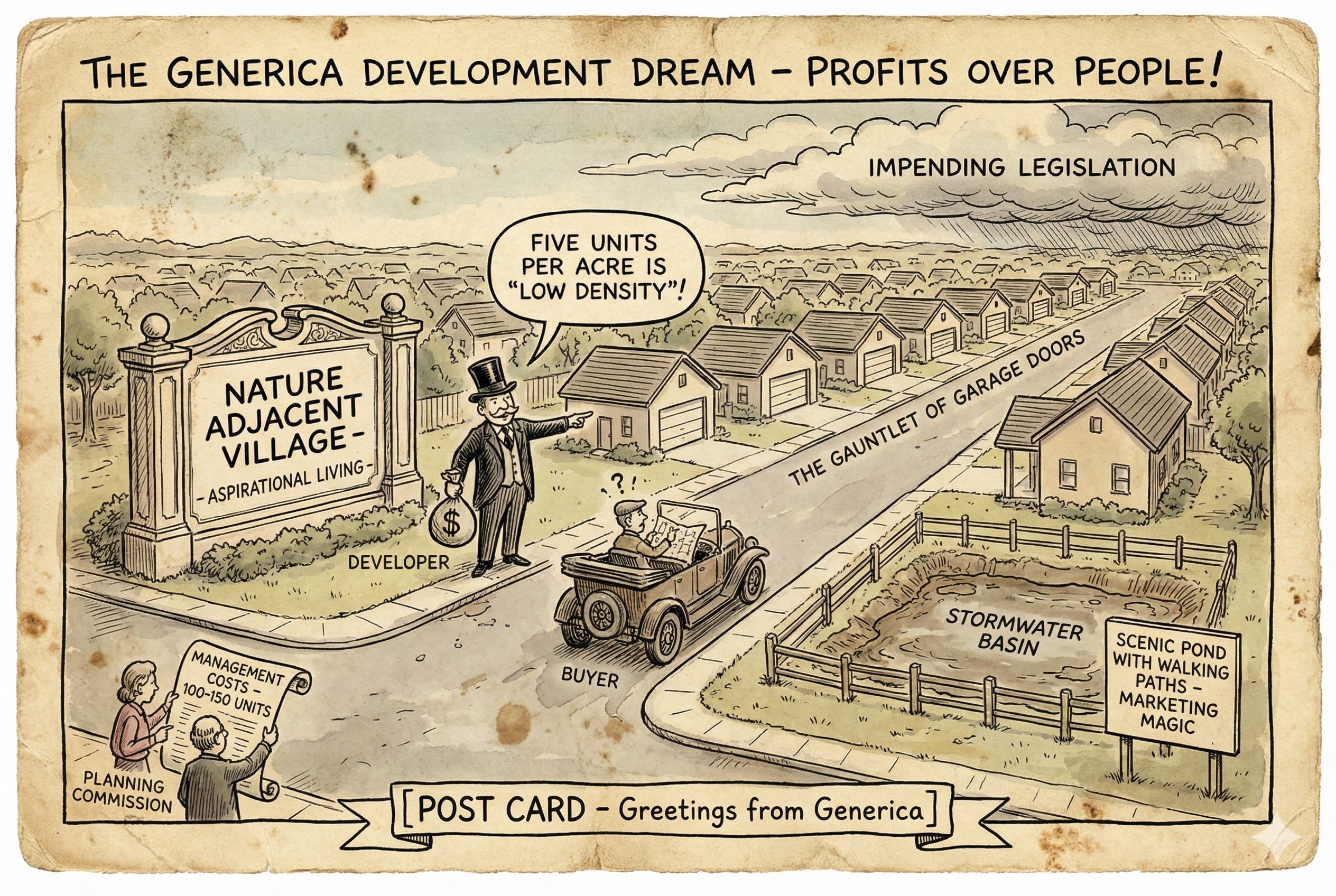
You start with 20 to 40 acres on the metropolitan edge, where land is still cheap. Get your parcel. Zone it residential-multifamily.
You need 100 to 150 units to make the management costs work. Five units per acre—tight enough to make the land cost pencil, but you call it “low density” at the Planning Commission. Floor plates? All two-bedroom, two-bath. Same 1,300 to 1,700 square feet.
It was also my job to make it look like something other than what it is.
I’d dress up the entrance with a monument sign, always nature-adjacent, always aspirational. The road pattern? A grid because that’s efficient. But it reads as a gauntlet: driving between two walls of garage doors. The required stormwater basin becomes a “water feature.” Now you’ve got an amenity for marketing: “scenic pond with walking paths.”
The Planning Commission wants “character,” so you give them the minimum to say yes. Full brick facades? Too expensive. Add a brick water table—the bottom three feet. It photographs well from the street.
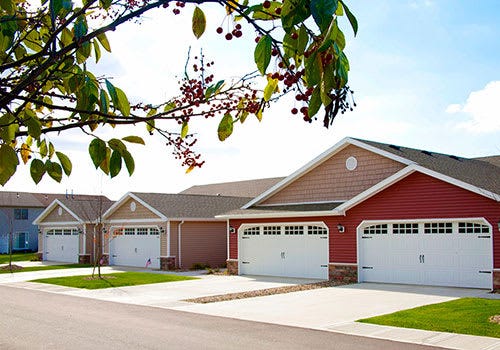
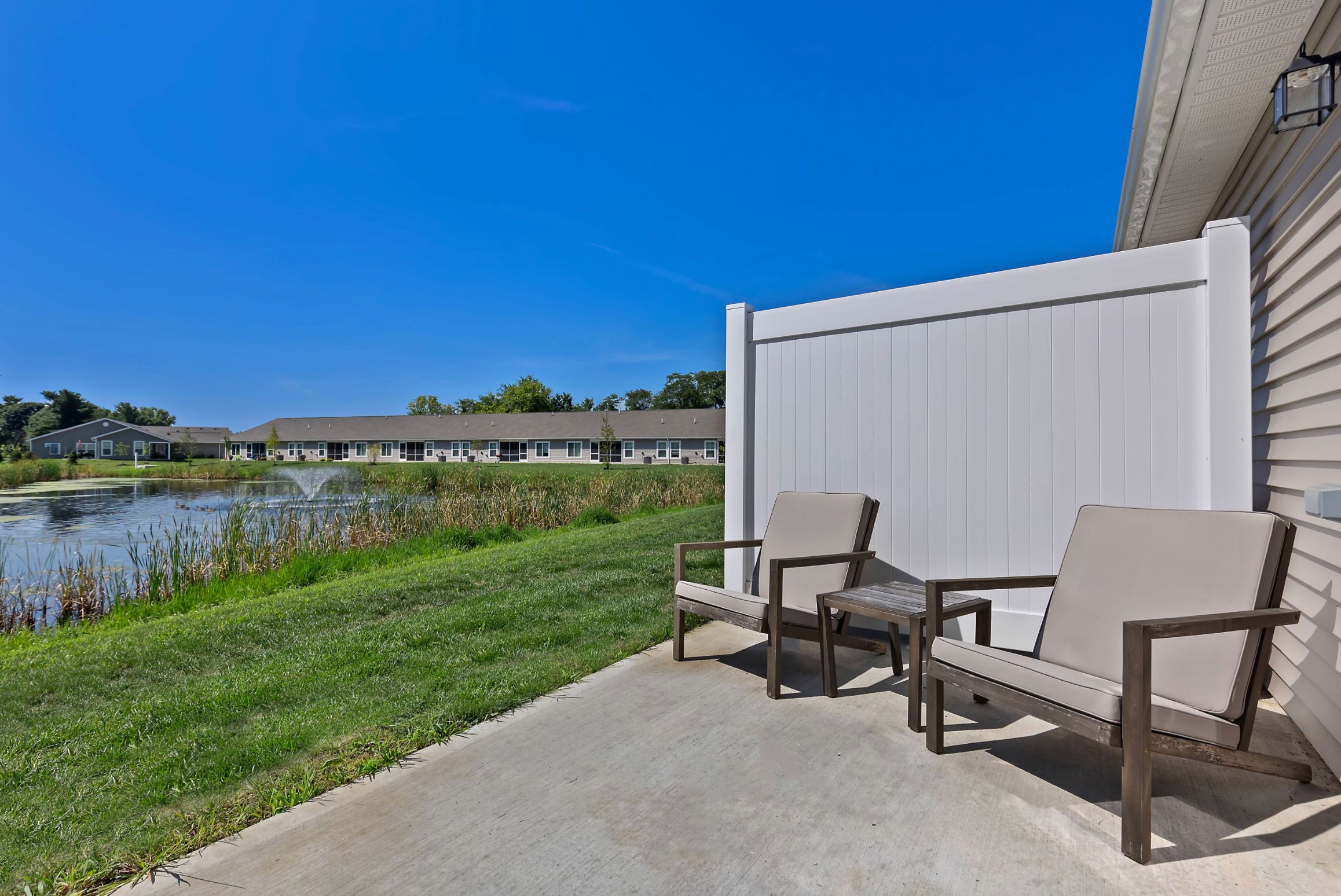
But drive through one of these places and you see what it really is: 150 garage doors repeated in a grid. Low-pitched roofs optimized for cost. The front door barely visible. What matters is the back: the sliding glass door to your “yard”—a twelve-by-twelve concrete pad.
The whole product is designed backward from one number: What’s the highest rent we can charge while still hitting the market?
And I helped build it.
When Homeownership Died
Here’s what happened: Around 2015, institutional money figured something out. In 90 percent of metro areas, a median-income household couldn’t afford the median-priced home anymore.
We’d priced the middle class out of the middle of the market.
The median first-time homebuyer is now 40 years old. Forty. That’s people who’ve been waiting, saving, watching the goalposts move for a decade.
Homeownership pushed back an entire generation.
The gap became enormous. Old crappy garden apartments on one side, $400,000 starter homes on the other. Nobody was building rental product that felt like ownership.
So private equity asked: What if we built something that looked like homeownership but operated like an apartment complex?
The Build-to-Rent market exploded. I watched it go from a weird niche to a forty-billion-dollar asset class in less than a decade.
And here’s the thing: The market loves it.
I have a friend who lives in one of these places. Got divorced, needed a place fast. Buying wasn’t an option—half his assets gone, needed to stay liquid.
I brought over wine. The place is beautiful. Open kitchen, massive island. Quartz counters, stainless appliances. Attached garage for his golf clubs.
“Perfect for right now,” he said. “No maintenance headaches, no long-term commitment. I can just... live.”
Can you blame him? I can’t. At $2,100 a month, it’s cheaper than the mortgage on a comparable house.
The Landscape That Resists Memory
But here’s what nags at me: Try getting him to describe where he lives.
He can’t tell you it’s “the cute bungalow with the red door and the magnolia tree.” The best he can do is “Third driveway on the left after you pass the pond.”
Every building looks identical. Same brick water table, same roof pitch, same garage door. The landscaping is standardized—three shrubs per unit, one tree every four units.
We’ve built a landscape that resists memory. You can’t describe it. You can’t form a mental map. You just remember “it was nice” and “somewhere in the development with the pond.”
Why It Has to Be This Way
Let me show you the math.
The model only works at scale. Below 100 units, management costs kill you. You need cheap land—$15,000 an acre instead of $150,000. You need standardization. Every variation costs money.
Everything is reverse-engineered from what the market will bear. If two-bedroom rentals are getting $2,100, you work backward: What can we build that delivers 7% returns to the fund at that rent?
The attached garage? Tenants stay eighteen months longer if they store their junk in one. Storage stickiness.
The concrete patio? It costs $900 to pour, practically nothing to maintain. You get the sensory experience of a yard for practically nothing on the operating cost.
The brick water table? Full brick would add $8,000 per unit. The water table adds $1,200. It photographs exactly the same from the street.
Every decision optimized: Make this feel as much like a house as possible while keeping it as cheap as possible to operate at scale.
It works.
The buildings in Ohio look identical to the ones in North Carolina. Different climate zones, different building codes, same product. The algorithm doesn’t care about place. It cares about replicable outcomes.
These places lease up at 95% occupancy within six months.
The market is telling us: This is what people can afford. This is what people want.
So why does it feel like we’re losing something?
Because we’re training an entire generation that ownership isn’t for them. That equity was their parent’s game. That the best they can hope for is a convincing simulation and not a very good one.
The system is working exactly as designed. They get transient stability that looks like a home. The fund gets return on capital.
Except they are subscribers, not owners.
Except they aren’t building equity, aren’t setting roots.
And who am I to tell them that’s wrong? By every rational measure, they made the right choice.
Adapting Places to Algorithms
The term I’ve started using is Algorithmic Terraforming.
Yeah, it’s a deliberate feather-ruffler. You’re welcome.
We’re not adapting buildings to places anymore. We’re adapting places to algorithms.
The algorithm says: “The market wants affordable rental units that simulate single-family living in suburban markets with cheap land and highway access.” So we find parcels that fit. Flatten them. Install the standardized product. Landscape around it. Name it after whatever used to be there.
The local geography doesn’t matter. The history doesn’t matter. The character of the surrounding town doesn’t matter.
What matters: Does the parcel accept 150 units at five per acre? Can we hit the rent number? Can we get to 95% occupancy?
This is terraforming. We’re transforming specific places into generic platforms for a financial product. Erasing local particularity to install universal efficiency.
What Never Gets Built
I think about that kid who’ll grow up in one of these developments. Ten years old, riding bikes around streets that all look the same. When they’re thirty, they’ll remember it was clean. Modern. Nice.
But will they remember anything particular? Or will it blur into “one of those developments somewhere outside Cleveland”?
Here’s what keeps me up: That kid is growing up in a place designed never to become particular. Ever.
And that’s the problem.
It might stay a well-maintained subscription product. All 150 units identical. All maintained to the same standard. No resident will ever make it their own because they don’t own it. No red doors. No magnolia trees planted by someone who wanted to watch them grow. No character that emerges from decades of individual choices.
My friend with the Weber grill will pay $2,100 a month until he doesn’t. Another subscriber moves in. The property stays at 95% occupancy. The fund gets its 7% returns. The place will be clean, functional, maintained.
And it will never, ever become particular.
Missing the Particular
The trade wasn’t efficiency for memory. It was permanent subscription for any possibility of ownership that creates character over time.
Maybe a generation growing up in algorithmically optimized landscapes will recalibrate what home means. Maybe character and particularity were always bourgeois luxuries.
Maybe I’m mourning something that was never as real as I thought.
But I don’t think so.
We’re losing the ability to form specific, irreplaceable memories of place. And we’re losing the possibility that places might become particular over time through accumulated choices of distributed owners.
Generic place, revolving people.
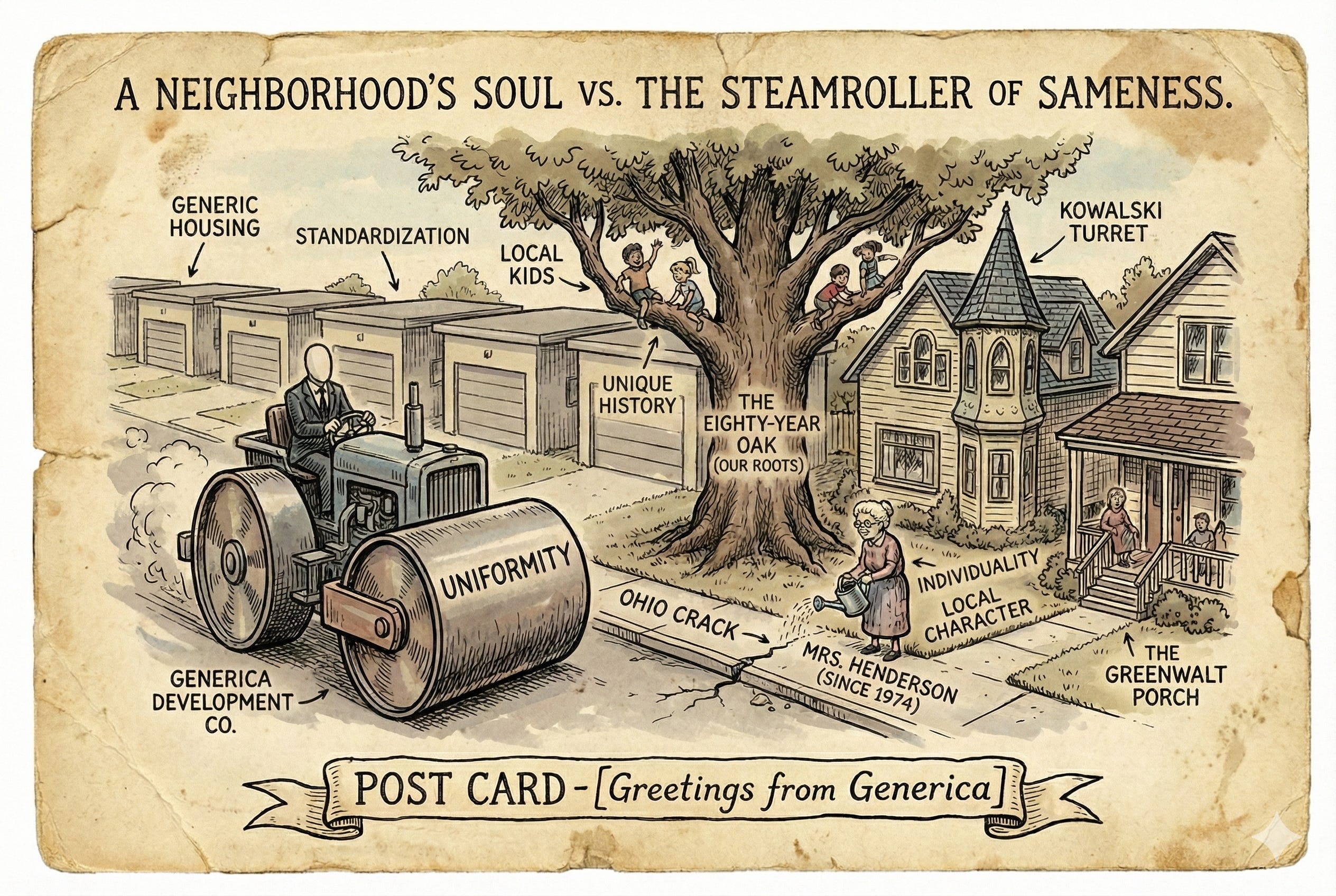
We all know what we actually want. The oak tree in the Johnsons’ front yard that’s been there eighty years—the one every kid in the neighborhood climbed. Mrs. Henderson who’s lived in the same house since 1974, who waters her roses every morning at 7am and knows everyone’s name. The crack in the sidewalk shaped like Ohio, where you learned to ride your bike. The Kowalski house with the weird turret addition they built in the 90s that became a landmark—”turn left at the turret house.” The Greenwalt’s porch where the local teenagers congregate after school. The one house painted that specific shade of yellow that everyone argued about but now can’t imagine the street without.
The particular, the specific, the irreplaceable.
But we’re fighting The Formula. And The Formula is optimized for flow, not friction. For efficiency, not character. For permanent, well-maintained subscription that never becomes anything more.
The Formula works. By every measurable metric, it’s solving the problem.
Except it’s solving for the wrong thing.
It’s solving: How do we house people affordably at scale? The answer: Standardize everything. Flatten the land. Install the same product over and over.
But the question we’re not asking is: What are we training people to accept?
We’re training them that ownership isn’t for them. That place doesn’t matter. That home is a subscription service, not a stake in something permanent. That character and particularity are luxuries you trade away for app-based maintenance requests.
Given the constraints we’ve created—ownership unaffordable in 90% of markets, first-time buyers pushed to age 40—The Formula is the rational response.
We optimized for flow. We got terraformed farmland with 150 identical garage doors in a grid.
Breaking The Formula would require making ownership accessible again. Letting neighborhoods evolve incrementally. Accepting density in places that have outlawed it for 70 years.
None of that is happening.
So The Formula keeps spreading. And an entire generation keeps subscribing to simulations of what their parents owned.
I don’t know how to get it back while The Formula keeps winning.
The algorithm is working perfectly.
That’s what scares me most.
The RFI (Request for Insight): For those of you who grew up in a place with specific character—the oak tree everyone climbed, the corner store owner who knew your name—do you think the next generation growing up in algorithmically optimized developments will miss what they never experienced, or will they simply define "home" differently than we do?
Subscribe for free to receive new posts and support my journey exploring why our cities are shaped the way they are.
Missed an installment of Escaping Generica?
Why do our communities all look the same? Why can’t we build what we actually want? If you are just joining the conversation, you can catch up on the series here:
Week 1: The Great Flattening—An Introduction to Escaping Generica
Week 2: The Hermit Crab Economy: A New Theory on Affordable Housing
Week 3: The Architecture of Consumption: How the Refrigerator Started Reshaping our American Cities
Week 4: Stranded Assets: The Dead Mall Theory of Capital Flow
Week 5: On Moments, Memory, and Why Most Cities Build the Forgettable
Week 8:You’re Not a Neighbor. You’re a Data Point. Please Shop Accordingly.
The Physics of Economic Momentum: Why Efficient Markets Build Storage Units
About Jeff Kerr: For thirty-five years, I lived inside the machine. From engineering the footprints of national retail chains to leading a firm that helps communities trying to reclaim their identity, I experienced the “Invisible Script” from the inside. I spent decades navigating the tension between executing the formula and fighting it. Now, I am stepping back to decode it.
About Escaping Generica: Escaping Generica is a collection of my essays decoding the physics of sameness. It investigates why our towns are losing their identity not to bad taste, but to “Market Entropy”—a calculated system of least resistance. These reflections offer a roadmap to stop sleepwalking through the franchise loops and find our way back to distinctiveness.
Join the Escape: escapinggenerica.substack.com
Great post, with lots to think about. I will say that I don't see your solution with reference to density working. California will soon be hit with SB-79, a law that upzones all of the area within 0.5 miles of a transit center. We are already seeing high-density built to formula. It's all rentable sprawl, it just goes in a different direction. The powers that be call it "in-fill," a nice term that implies making use of empty space. But, the space isn't empty. It's filled with the kind of buildings people remember, the old single family homes that have stood for a hundred years. Now, all we get is high-density warehousing. Modern "homes," modern high-rise prisons, all built to the same spec.