
On Moments, Memory, and Why Most Cities Build the Forgettable
Week #5: Most cities build "Alzheimer Urbanism"—beautiful places the brain can't remember. We chase infrastructure when we should protect moments.

"We didn't plan that applause. Nobody organized it. There was no program, no schedule, no tickets. We built a place for people to sit and watch the lake. What emerged was something else entirely. A moment. The kind that sticks."
I didn’t notice when the applause started.
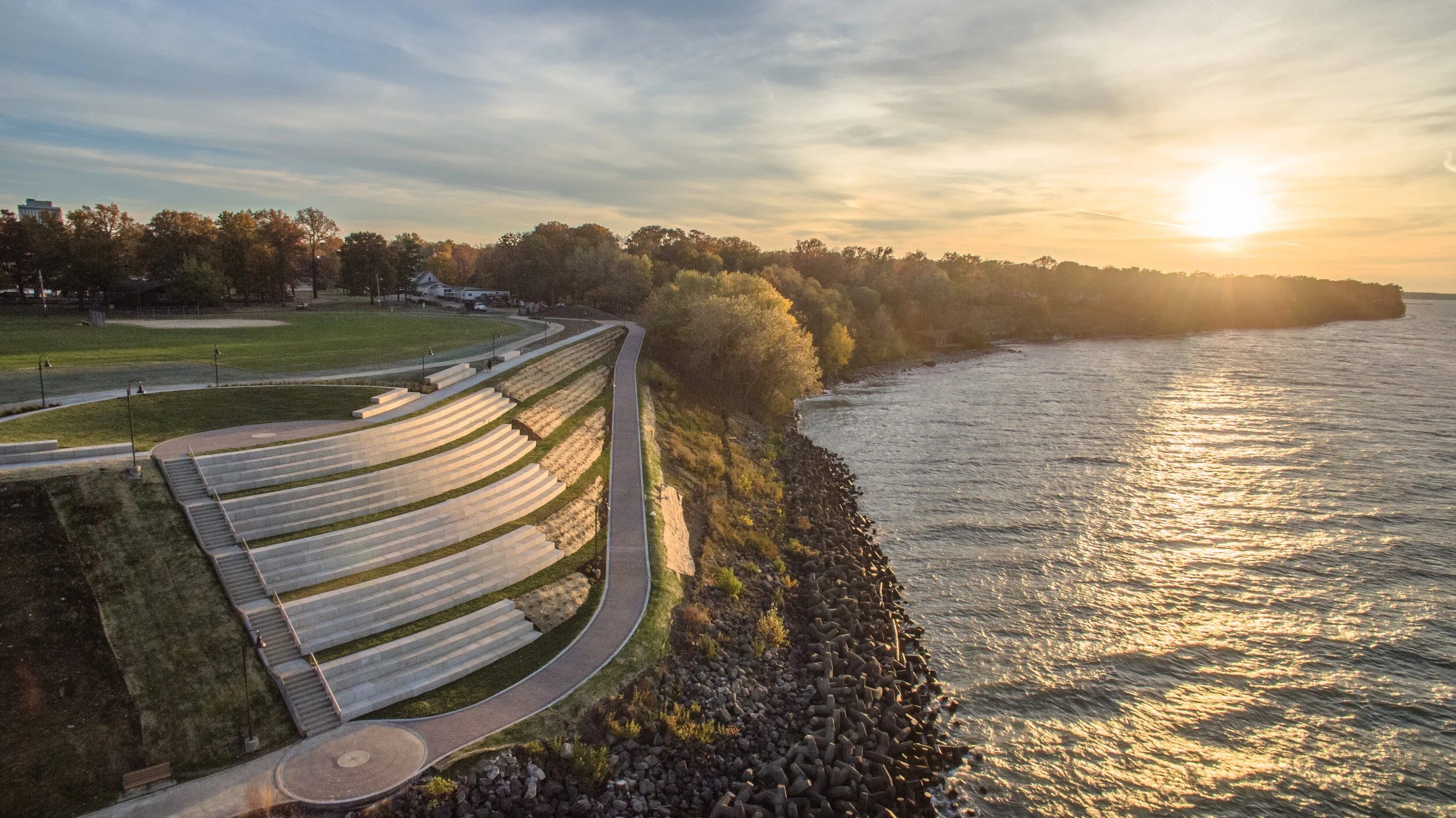
I was standing on the Solstice Steps in Lakewood, Ohio, watching the sun bleed orange across Lake Erie. It was a Tuesday evening in June. A hundred strangers scattered across five tiers of concrete—sitting, lying down, kids running between adults, teenagers trying to capture something that doesn’t really photograph.
And then I heard it. Clapping. Like we’d just watched a performance.
We were applauding the sun. For doing what it does every single day. For sinking below the horizon on schedule, indifferent to our presence.
I’ve been thinking about that moment for years. Not because it was beautiful—though it was. But because it revealed something I’d been trying to name for thirty years inside this machine.
We didn’t plan that applause. Nobody organized it. There was no program, no schedule, no tickets. When we designed those steps, we built the stage: concrete, paths, lighting. Five tiers in a gentle curve. Nothing fancy. We built a place for people to sit and watch the lake.
What emerged was something else entirely.
A moment. The kind that sticks.
And I realized: This is what I’d been missing for three decades. Not places. Not amenities. Not even community in the abstract sense. I’d been missing the conditions that allow moments to happen. The triggers that create memories. The peaks that make places worth defending.
The Missing Ingredient
Here’s what I focused on for years in my practice: Place and programming.
Build the plaza. Schedule the farmers’ market. Install the benches. Plant the trees. Program the activities. Put bodies in space. Check the boxes. Mission accomplished.
Except it’s not.
Because place plus programming doesn’t automatically equal community. There’s something missing in that equation. Something I couldn’t quantify, couldn’t bill for, couldn’t guarantee in a proposal.
The moment.
Not the physical location. Not the scheduled event. But the thing that happens—or doesn’t happen—when you’re there. The feeling you can’t quite name. The trigger that makes your brain say, “Remember this.”
As the landscape architect, I could describe the Solstice Steps in perfect technical terms. Reinforced concrete. Specific dimensions. Sight lines calculated for sunset viewing. Drainage engineering. ADA access. The stuff you put in construction documents.
But none of that explains the applause.
The applause is the moment. And the moment is what creates everything else.
Salvation by Bricks
Cities keep trying to buy their way to community.
Two million on a new park. Five million on streetscape improvements. Twenty million on waterfront development. The renderings look beautiful. Trees in full maturity. People scattered across the grass in carefully casual poses. The plaza full of life.
Then it opens.
People come. They use it. They walk through on their lunch break. Parents bring kids to the playground. People sit on the benches.
The city checks the metrics. Foot traffic: good. Usage rates: satisfactory. The place is functioning.
But functioning isn’t the same as mattering.
Here’s what nobody wants to admit: You can spend twenty million dollars and still build a place the brain forgets by Tuesday. Most cities build “Alzheimer Urbanism”—places that might be physically beautiful but neurologically impossible to remember.
Nobody plans to build forgettable places. I thought community would emerge from infrastructure. Spend enough money, build enough stuff, people will attach.
But moments are more complex than that. More nuanced. They require understanding what triggers emotional attachment. And if you can figure that out—really figure it out—you’re better off than most places in America.
Because the trigger isn’t the bench. It’s what you see from the bench. It’s not the plaza. It’s what happens in the plaza. It’s not the park. It’s whether something happens there that your brain decides to keep.
The phenomenon may already be there. You just need to look for it.
The sunset. The light at certain times of day. The tree drops cotton every June. The corner where neighbors naturally cross paths. The steps where you always get ice cream. The vista that opens suddenly around that turn on the trail. The one spot where you get this magical view of the city skyline.
We didn’t create the moment on those steps. The sun was setting over Lake Erie long before we poured concrete. The phenomenon was happening every single night.
What we did was ask: “Where does this already happen? What’s the minimal infrastructure needed to let people witness it together?”
Five tiers of concrete. That’s it. We built the stage. The moment was already performing.
I didn’t understand this for thirty years. I thought the plaza mattered. I thought the bench I picked out mattered. I thought if we built it right, people would attach.
Then I learned how memory actually works.
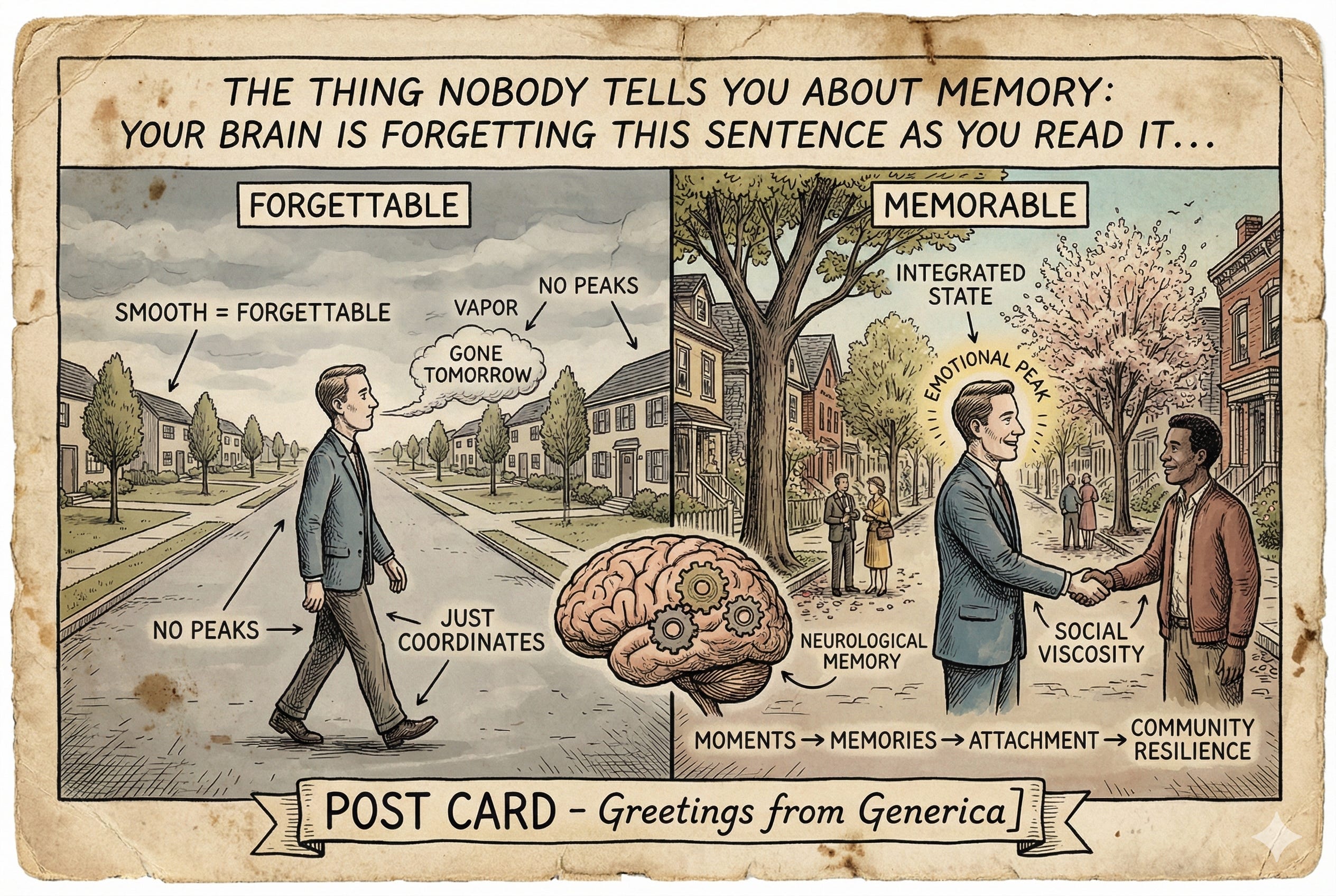
Your brain is forgetting this sentence as you read it. Most of what you experience today will be gone by tomorrow. Last Tuesday? Unless something happened, it’s already vapor.
But some things stick.
When you experience something emotionally intense, your brain does something it rarely does. Different networks that usually work independently suddenly synchronize. Memory formation goes from possible to nearly guaranteed.
Your brain needs something to grab onto. Without peaks, there’s nothing to encode.
The smooth is literally forgettable.
And here’s the crucial part: The most memorable experiences aren’t purely novel. They’re familiar contexts with something slightly off. Recent research on memory formation found that expectancy violations—when something unexpected disrupts a familiar pattern—create the strongest memories (Kalbe et al. 2020).
You need the scaffolding of what you already know, but then you need a violation. Something peculiar that doesn’t quite fit the pattern.
This matters more than you might think.
Because every community is built on memory. Not metaphorical memory. Actual, neurological, encoded-in-your-brain memory. The accumulation of experiences that tells you, “this place is mine.” The sensory hooks that trigger not brand recognition but belonging.
The moments that, repeated over time, build into attachment.
The Missing Link: How Moments Become Community
Nobody explains this part in planning documents. They talk about creating vibrant neighborhoods, activating public spaces, and fostering community engagement. But they skip the mechanism.
Here’s how it actually works: Moments create memories. Memories create attachment. Attachment creates what I have called social viscosity—the stickiness of a place that slows people down and makes them engage. And viscosity creates the resilience that allows communities to resist forces that want to flatten everything into sameness.
It’s a chain. And it breaks at the first link.
Watch it work: You walk the same route every day. Same streets, same trees, same houses. Familiar context. Then one morning in April, the tunnel of maples overhead explodes into spring green. You smell the cut grass; you feel the warm spring breeze. Daffodils splashing yellow across the yards. Peak experience. Emotional response. Your brain encodes it. You remember that walk. Next spring, you notice when it happens again. Then you start noticing the neighbor who’s always out at dawn. You nod. Eventually, you talk. You learn she’s lived there for forty years. She remembers when they planted those trees.
That tree canopy created a moment. The moment created memory. The memory created attachment to that route, that street, that neighborhood. The attachment made you slow down, notice, engage. You started showing up to neighborhood meetings about the road widening proposal. Because they want to take out the trees for turn lanes. And you can’t let that happen. Because those trees aren’t just trees anymore. They’re your memory structure. Your attachment infrastructure. The thing that makes this place yours.
That’s social viscosity. That’s resilience. That’s how communities form.
Or watch it fail: You live in a subdivision built in 2015. Every street has the same width. Every house has the same setback. Every yard has the same three approved tree species. You drive the same route to the same stores in the same parking lots.
Ten years later, what do you remember about any of it? Where did memory grab hold?
Nowhere. Because there were no peaks. No peculiarity. No emotional arousal. Your brain processed it all automatically and efficiently, without engaging in integration. You used those places. You completed your transactions. But you formed no attachment. Just addresses. Just coordinates on a map.
Where Memory Still Grabs Hold
Walk through Charleston’s historic downtown. Or the streets south of Gastown in Vancouver. Or any neighborhood built before we figured out how to optimize everything.
Pay attention to what you’re feeling, not just seeing.
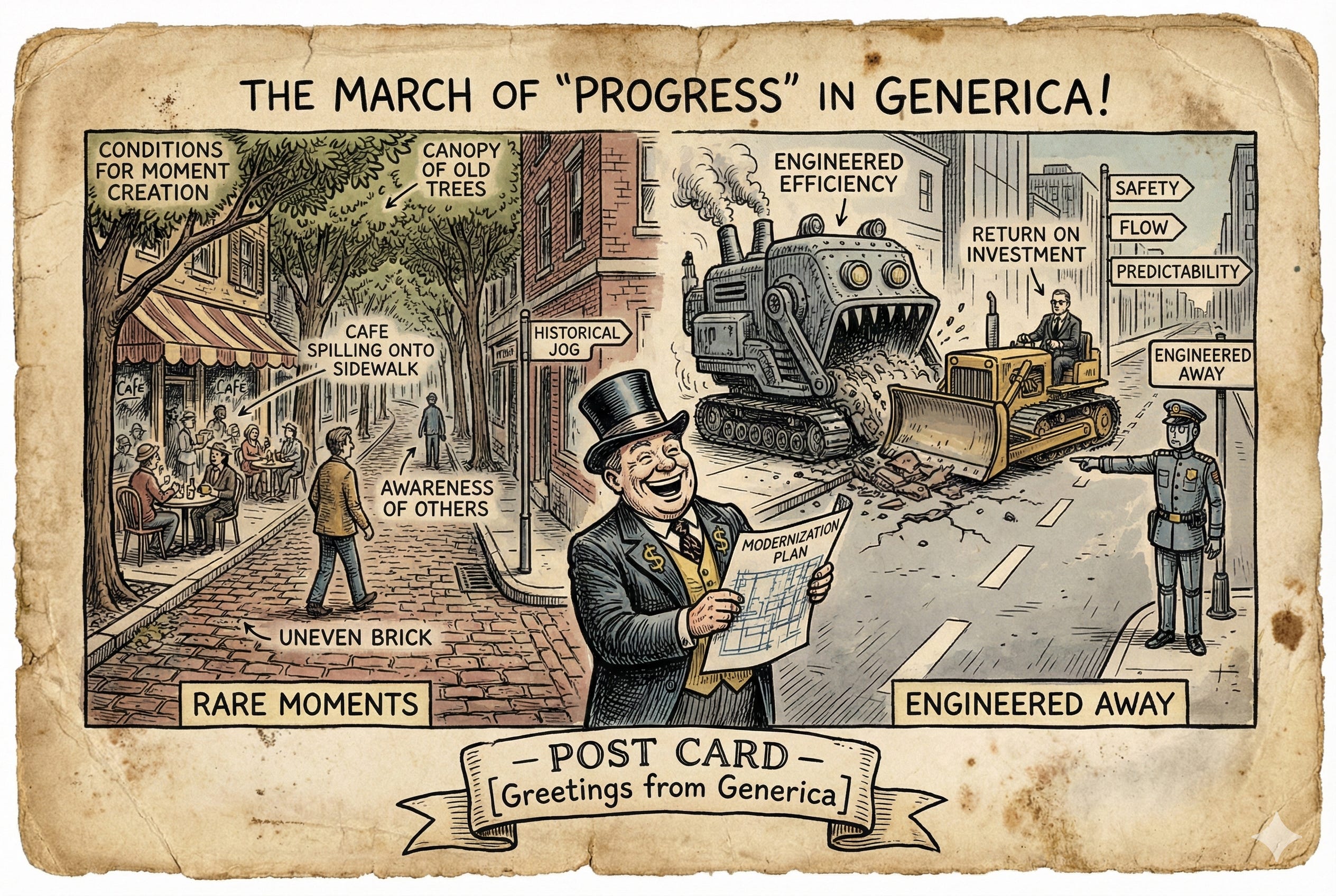
The narrow street that makes you aware of the person walking toward you. The cafe spilling onto the sidewalk, life on display. The canopy of old trees creating a tunnel of green. The brick that’s slightly uneven under your feet. The corner where the street jogs for no modern reason but plenty of historical ones.
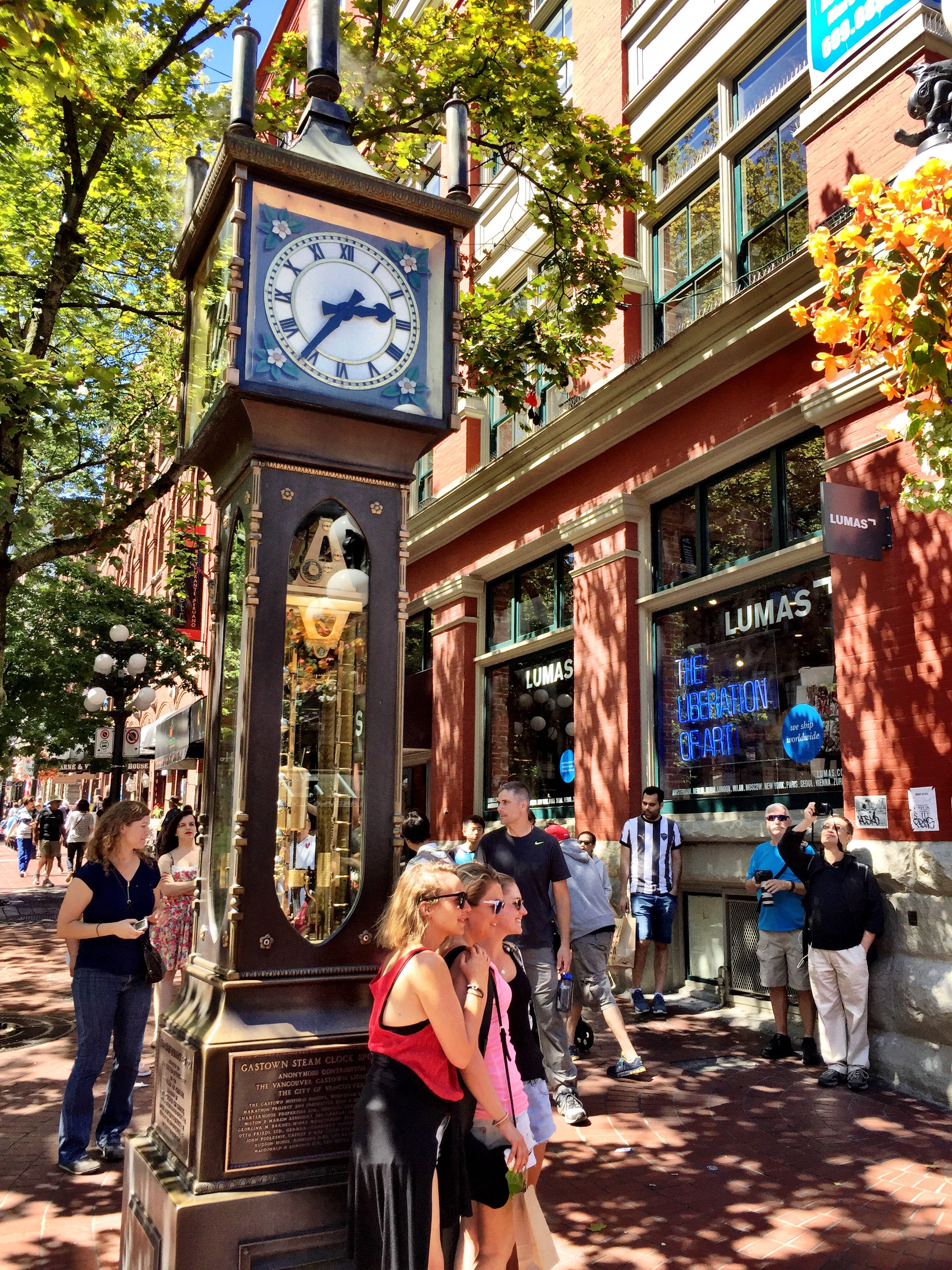
These aren’t better places because they’re old. They’re better places because they’re memorable. Because they provide peaks. Because they violate your expectations just enough to engage your brain.
Because they create moments.
Once you start looking for them, you realize how rare they’ve become. How much we’ve engineered them away in the name of efficiency, safety, flow, predictability, return on investment.
How much we’ve optimized for recognition at the cost of memory.
Now walk through any new development. Look at what they built. Tot lot: check. Dog park: check. Walking trails: check. Community center: check. Every amenity a planner could identify is present.
But where are the moments?
The difference between the old neighborhood people fight to preserve and the new development nobody remembers isn’t the amenities. It’s that the old neighborhood has moments embedded in it. Decades of them. The tree that three generations climbed. The corner where people naturally gather. The peculiar angle in the street creates the spot where you always see your neighbor.
These accumulated over time. They weren’t planned. They emerged.
And now they’re the memory infrastructure that makes the place worth defending.
The new development hasn’t had time for that yet. It’s waiting for moments. And moments can’t be purchased. They can’t be programmed. They have to be recognized. Framed. Protected.
What You Can Actually Do
You can’t fix the whole system. But you can do something more immediate.
Find where moments want to happen.
Walk your neighborhood. Not with purpose, not with destination. Just walk. And pay attention.
Where does the light change? Where do you naturally pause? Where have you seen other people stop, look, notice? Where do you smile without meaning to?
Those are your clues. Those are where moments are trying to happen.
The tree that’s been there for eighty years. The corner where you always see that neighbor. The spot where the view opens. The sound that makes you stop and listen.
These aren’t things you build. They’re things you recognize. You frame. You protect.
Now ask: What threatens them?
The road widening proposal that will take the trees. The zoning code that won’t allow the sidewalk cafe. The parking minimum that pushes everything too far apart. The chain format that eliminates sensory distinctiveness. The efficiency that removes all friction.
You can’t stop The Formula. But you can protect the conditions that allow moments. You can show up to the meeting. You can point out what will be lost that can’t be rebuilt. You can name what people feel but haven’t been able to articulate.
Because once you name it, other people recognize it. They’ve been feeling it too. They just didn’t have the words.
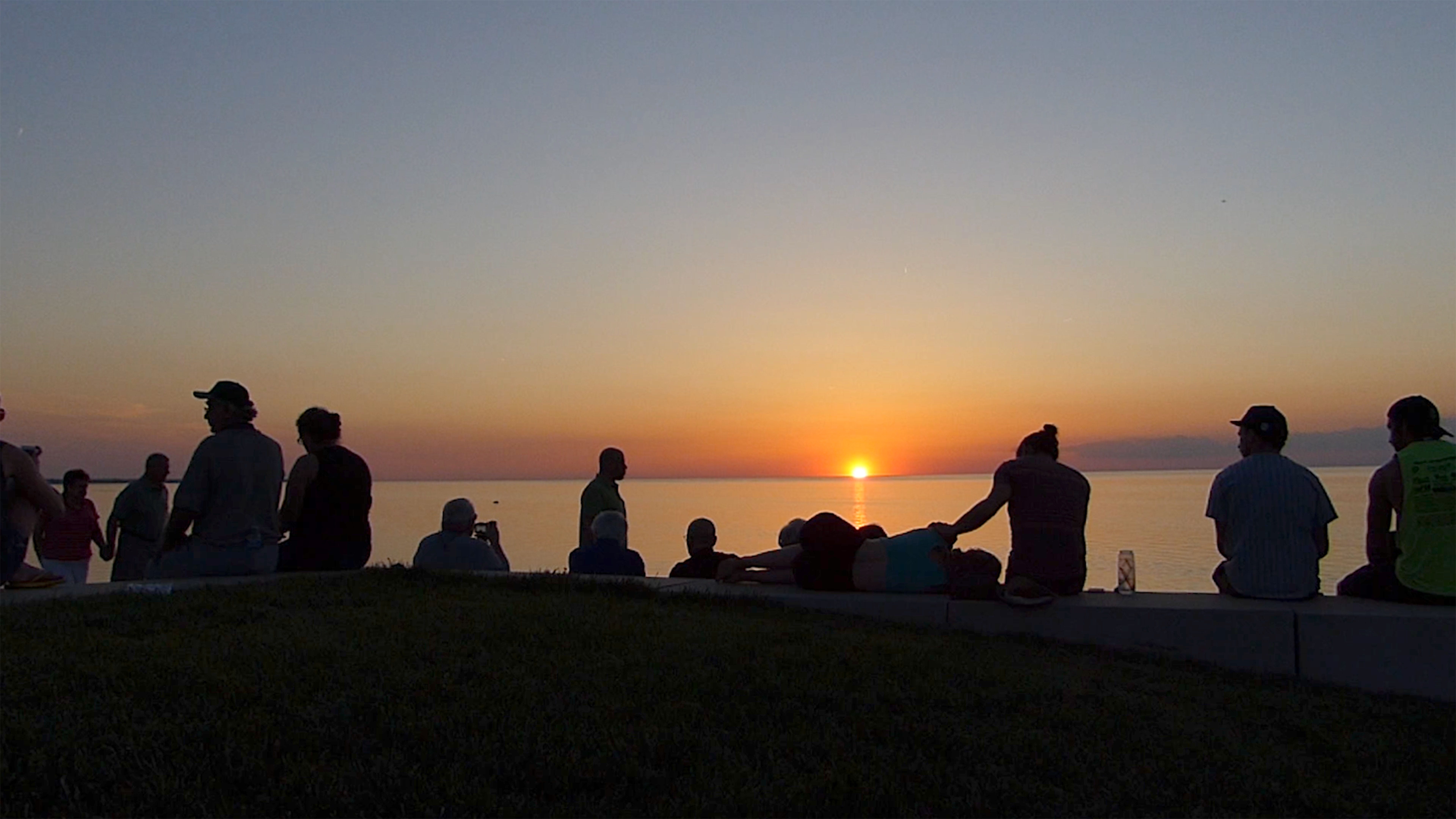
A hundred people clapping for the sun on a Tuesday evening in July as the sun sets.
Nobody planned that. Nobody programmed it. Nobody marketed it. It emerged because the conditions allowed it. Because we built a minimal frame for a natural phenomenon.
Because the moment was possible.
And now it happens almost every clear evening. Strangers gathering. Watching together. Applauding something that happens whether we’re watching or not.
That’s what moments create. That’s what we’ve been losing. That’s what we need to find again.
Not salvation by bricks. Not more programming. Just recognition of where memory wants to grab hold.
Because you can’t love what you can’t remember. And you can’t defend what you never loved.
The fight to Escape Generica isn’t won with better design or stricter zoning or more funding. It’s won by protecting the moments.
Because moments are how places become communities.
And communities are how we survive.
Reference:
Kalbe, Felix, Stina Bange, Annika Lutz, and Lars Schwabe. 2020. “Expectancy Violation Drives Memory Boost for Stressful Events.” Psychological Science 31 (11): 1409–1421.
The RFI (Request for Insight): What's the most memorable place in your community—the one people fight to preserve—and if you had to identify the specific conditions that allow those moments to happen, what would you protect first when development pressure arrives?
If you missed the first essay, I would encourage you to read it to understand the bigger picture:
— /// —
About Jeff Kerr: For thirty-five years, I lived inside the machine. From engineering the footprints of national retail chains to leading a firm that helps communities trying to reclaim their identity, I experienced the “Invisible Script” from the inside. I spent decades navigating the tension between executing the formula and fighting it. Now, I am stepping back to decode it.
About Escaping Generica: Escaping Generica is a collection of my essays decoding the physics of sameness. It investigates why our towns are losing their identity not to bad taste, but to “Market Entropy”—a calculated system of least resistance. These reflections offer a roadmap to stop sleepwalking through the franchise loops and find our way back to distinctiveness.
Join the Escape:escapinggenerica.substack.com